Empowering cloud-native developers on Kubernetes anywhere
Hello KubeCon and welcome to San Diego! It’s fantastic to have the chance to get some warm California sun, as well as the warmth of the broader Kubernetes community.
Event-driven applications are a key pattern for cloud-native applications. Event-driven is at the core of many growing trends, including serverless compute like Azure Functions. Event-driven means your application responds and reacts to different events – business or system events.
I’m a developer and I’ll admit it, I’m learning Kubernetes. I’ve been developing web applications now for more than 20 years; however, the past two years I’ve moved to working with microservices applications. Originally the microservices were web sites on multiple virtual machines.
Helm is the best way to find, share, and use software built for Kubernetes, and the eagerly anticipated Helm 3 alpha is now available for testing. Try it out, give feedback, and help the Helm community get it ready for you to depend upon.
Greetings and welcome to KubeCon EU in Barcelona! As always, it is wonderful to see the community come together to celebrate how Kubernetes has made cloud-native ubiquitous and changed the way that we build and manage our software.
Event-driven architectures are a natural evolution of microservices, enabling a flexible and decoupled design, and are increasingly being adopted by enterprise customers. Fully managed serverless offerings like Azure Functions are event–driven by design, but we have been hearing from customers about gaps in these capabilities for solutions based on Kubernetes. Scaling in Kubernetes is reactive, based on the CPU and memory consumption of a container.
The service mesh may sound complex, but at its heart, it’s a very simple idea: a set of network proxies that transparently run alongside microservices, implementing reliability, observability, and security features by measuring and manipulating inter-service (“east-west”) traffic.
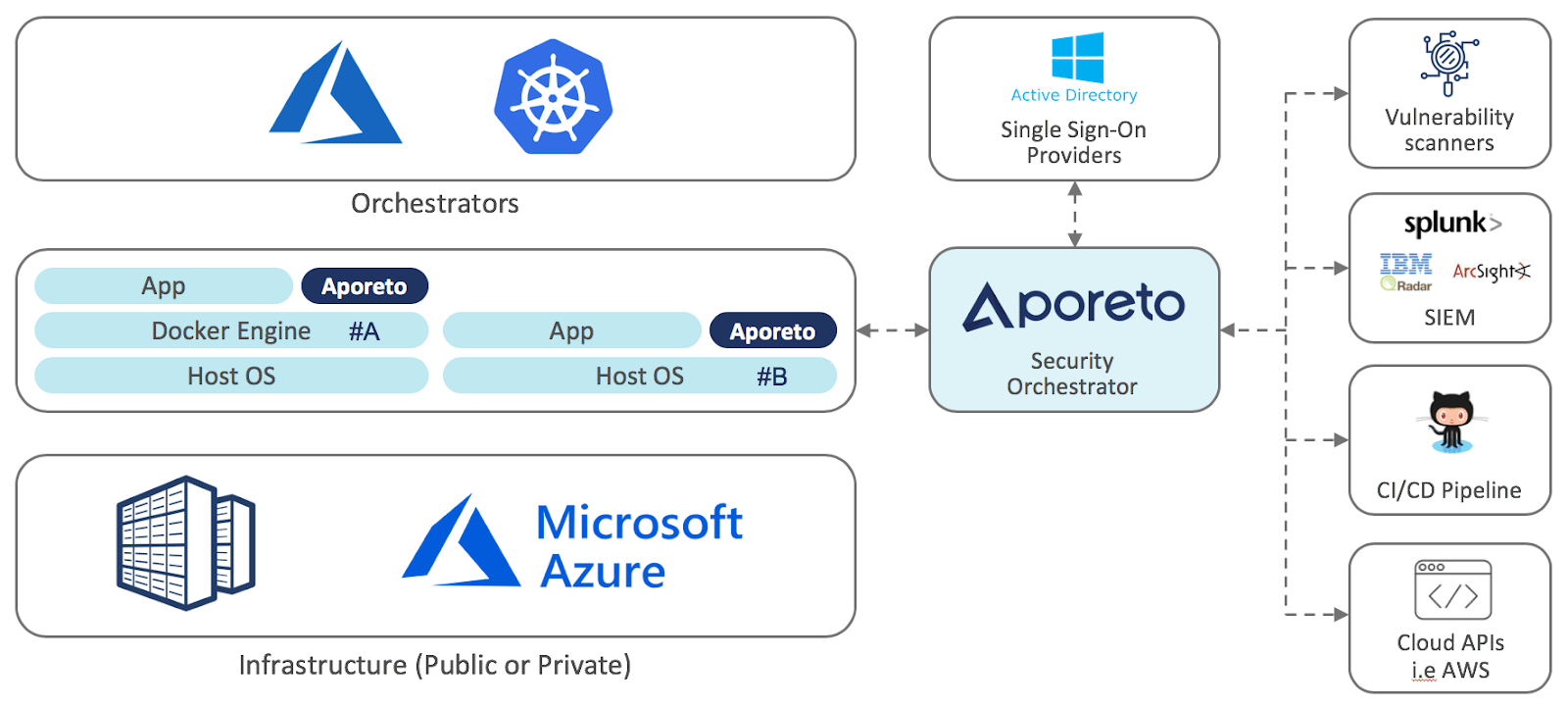
Centralized visibility and security for applications distributed on Azure Kubernetes Service (AKS) and private clouds Azure Kubernetes Service (AKS) makes it simple to deploy a managed Kubernetes cluster in Azure.