JUnit 5 adopts Azure Pipelines
Prior to March 2019 we, the JUnit team, used various continuous integration (CI) services to perform CI checks, from a self-managed Jenkins instance on CloudBees to a Travis CI and AppVeyor setup.
WordPress is a popular free and open source content management system based on PHP and MySQL. One of the major benefits of using cloud computing is having the ability to better support your application by scaling based on user traffic.
As adoption of containers grows, we are getting more asks around running Jenkins on Azure Kubernetes Service (AKS.) To run Jenkins on a VM on Azure, you can use our solution template in Azure Marketplace. If you want to run Jenkins on AKS, I am happy to announce that you can now consider Jenkins X on AKS.
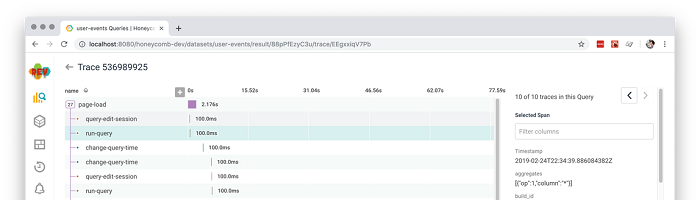
In recent years, many developers have discovered the power of distributed tracing for debugging regressions and performance issues in their backend systems, especially for those of us with complex microservices architectures.
Building reliable and performant distributed programs that span cloud machines and devices is a challenging endeavor, but one that more and more developers are required to tackle. Foremost among the challenges is effectively handling restart, reconnection, and recovery to a valid state.
Python is a great language for building web apps, and Django is one of the most popular frameworks. It lets developers create web apps fast, including modern RESTful APIs, with security and scalability in mind.
Headed into Seattle early for KubeCon North America? Join your open source friends for community workshops at the Seattle Microsoft Reactor on Monday, December 10th. We have an agenda packed with free hands-on learning with our open source Kubernetes tools, including Virtual Kubelet, Draft, Brigade, Helm, and more.
This article will show how to build a blog (or any other static content) using a very popular JAMstack (GatsbyJS, GraphQL, Markdown) and host it on static website hosting for Azure Storage, which provides a cost effective and scalable solution for hosting static content and JavaScript code.
It feels like we just announced our participation, but Hacktoberfest 2018 has officially come to a close. On behalf of my team and everyone at Microsoft, we thank each and every one of you for your contributions.
One of the best things about the open source community is that anyone can have an impact, regardless of skill set, geography, or experience. From lending software development expertise to designing artwork, translating docs, and evangelizing projects, trust me: there’s a project and community that’s waiting for you.
*UPDATE* Thanks for your amazing contributions to Hacktoberfest! Emails with the t-shirt redemption codes will be sent in November. Look for them within a few weeks.
For the last four years, DigitalOcean and GitHub have spearheaded Hacktoberfest, a month-long open source initiative that encourages people of all experience levels to contribute to open source projects. The premise is straightforward: open five pull requests (PRs) in any GitHub-hosted open source project and earn a limited-edition Hacktoberfest T-shirt.