Prior to March 2019 we, the JUnit team, used various continuous integration (CI) services to perform CI checks, from a self-managed Jenkins instance on CloudBees to a Travis CI and AppVeyor setup.

Bitbucket Cloud customers can now plumb their Bitbucket Pipelines to Azure, automatically building, testing and deploying their code, all based on a configuration file in their repositories.
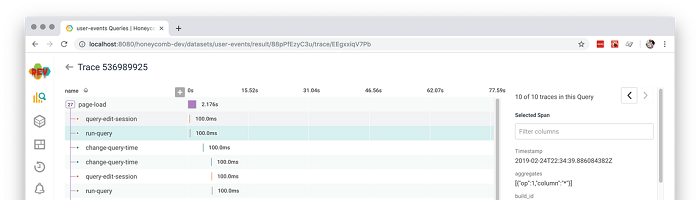
In recent years, many developers have discovered the power of distributed tracing for debugging regressions and performance issues in their backend systems, especially for those of us with complex microservices architectures.
In order to provide more clarity into what’s changed in each Terraform AzureRM provider release, we’re kicking off a blog series that will provide the highlights for each release.
Continuing with our approach to delivering a consistent and trustworthy acquisition experience for Microsoft container images, we are pleased to announce updates for the Microsoft Container Registry (MCR).
The service mesh may sound complex, but at its heart, it’s a very simple idea: a set of network proxies that transparently run alongside microservices, implementing reliability, observability, and security features by measuring and manipulating inter-service (“east-west”) traffic.
Building reliable and performant distributed programs that span cloud machines and devices is a challenging endeavor, but one that more and more developers are required to tackle.